Hydraulic simulation
A global gradient solver, EPANET-compatible: run a peak-hour snapshot or a full 24-hour extended period simulation of pressures, flows and velocities.
OrcaNet brings simulation, calibration, optimization, water quality and water hammer analysis of pressurized networks into a single browser tab. Import your EPANET model or draw the network straight onto a satellite map — and turn a study that took months into one that takes minutes.
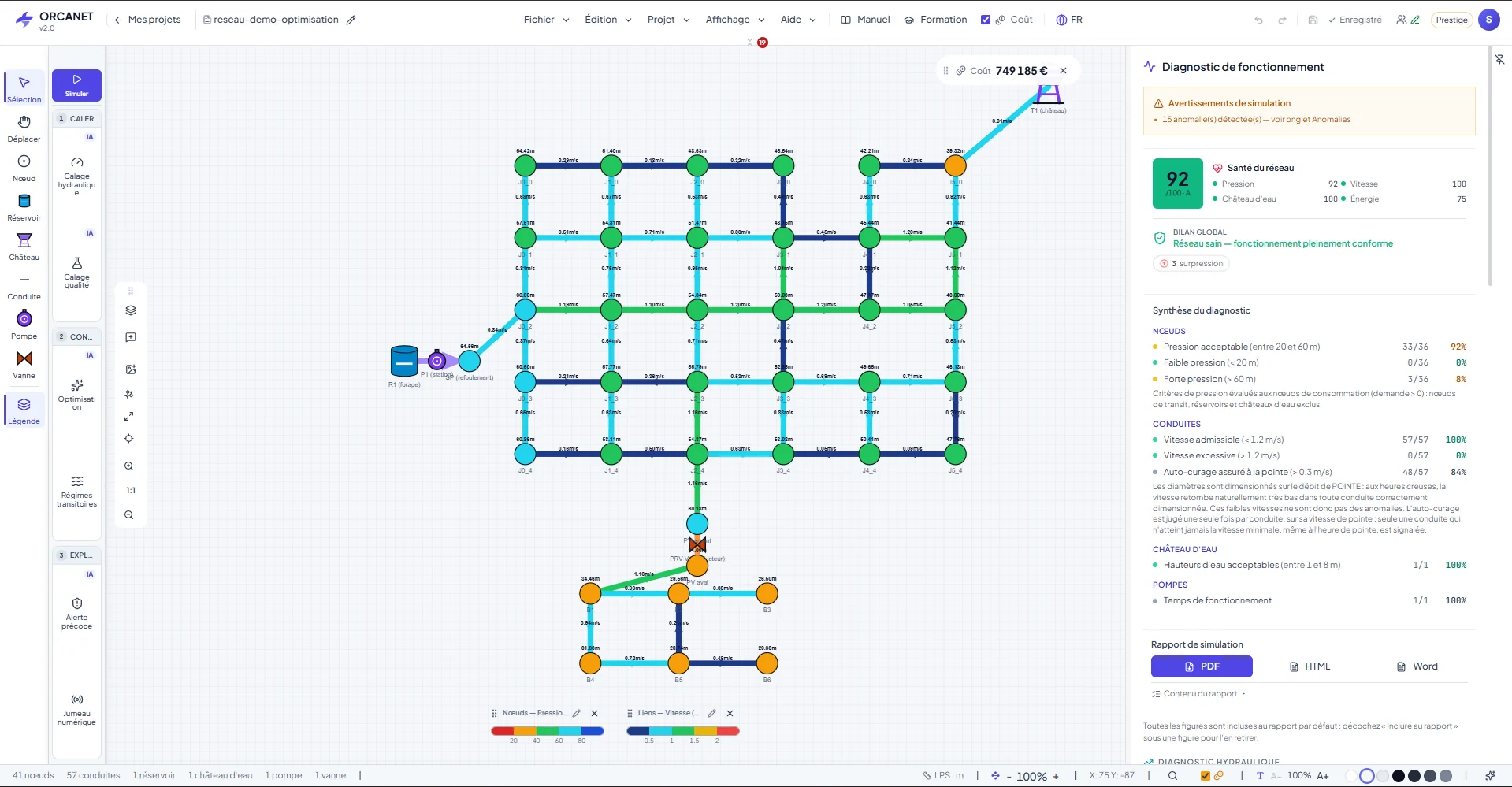
Simulation, calibration, optimization, quality and transients — the tools an engineer used to juggle across four separate programs.
A global gradient solver, EPANET-compatible: run a peak-hour snapshot or a full 24-hour extended period simulation of pressures, flows and velocities.
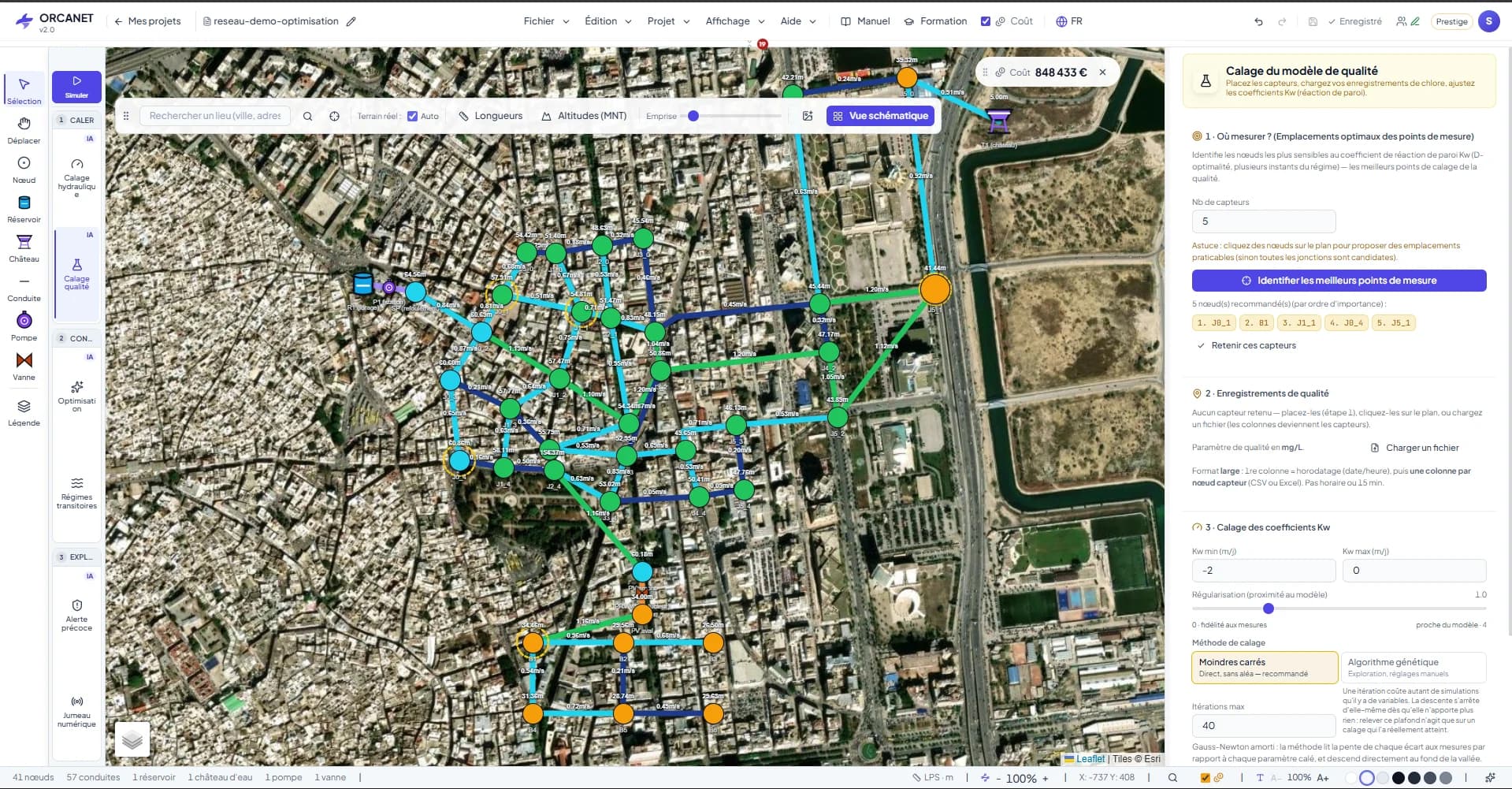
Trace the network over a satellite basemap with address search and DEM ground elevations — or import an existing .inp model and pick up where you left off.
Fit the model to your field data: hydraulic calibration on roughness and demand, quality calibration on wall reaction — down to where your sensors should go.
The optimizer sizes diameters for compliant pressures at the lowest network cost — typically 28% to 60% below a design sized by hand.
Compute surge on pumps, valves and long transmission mains, so you find the pressure spike in the model instead of in the ground.
A scored operating diagnostic flags anomalies node by node and pipe by pipe, then exports the whole study to PDF, HTML or Word.
A real product screen — the same model, on satellite imagery instead of a blank schematic.
Yes. It solves with the same global gradient method and imports and exports .inp files, so an existing model migrates in one click and your results stay comparable.
No. OrcaNet runs entirely in your browser — nothing to install, nothing to update, and your projects follow you from any machine. Creating an account is free.
That is exactly what the optimizer is for: it searches diameter combinations that keep pressures and velocities compliant, and typically lands 28% to 60% below a design sized by hand.
Create a free account and run a first simulation — no installation, no commitment.